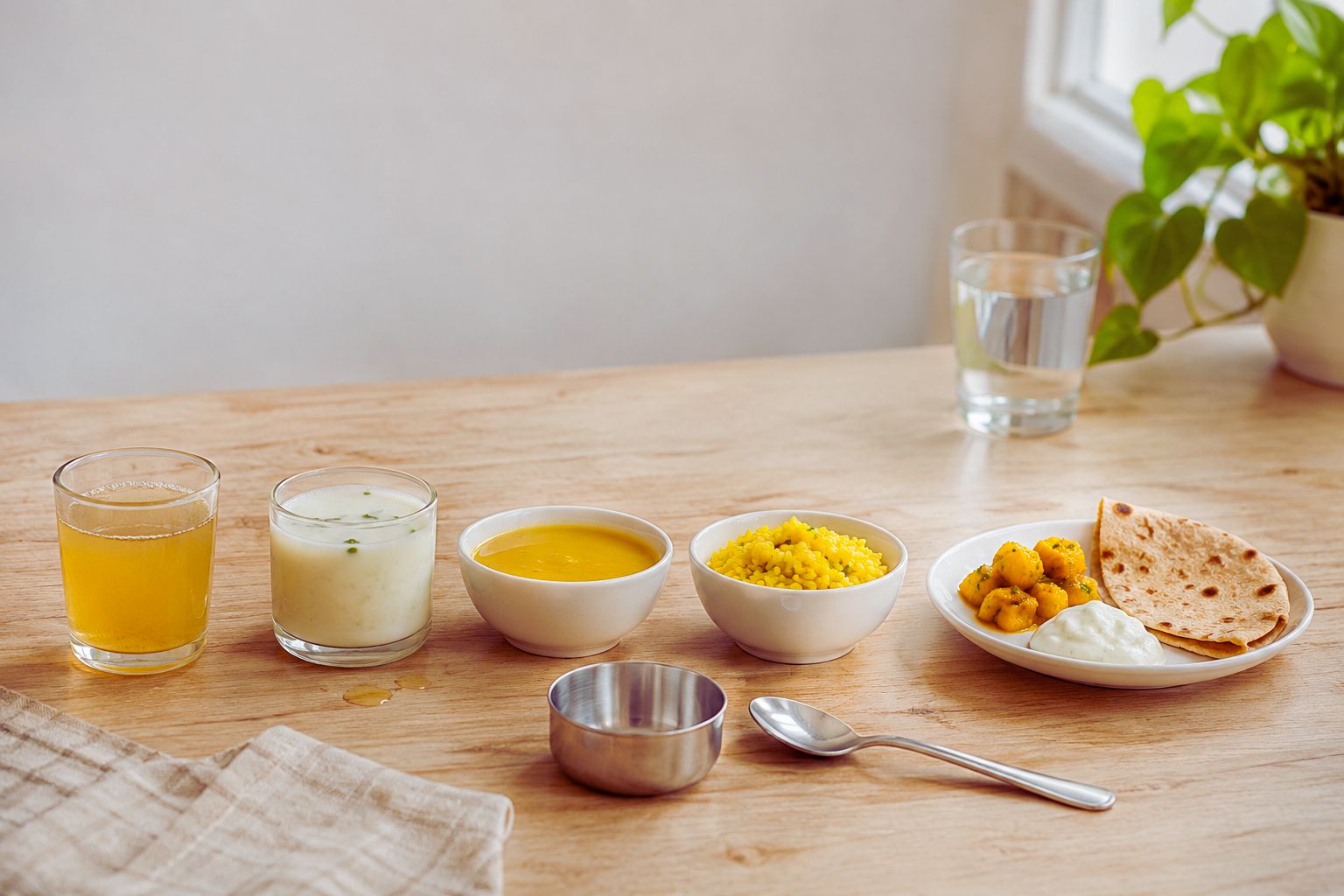
The surgery takes about an hour. The real work starts after you go home. And the first question almost every patient and their family asks at discharge is, “Doctor, ab khaana kya hai?” What can I eat, how much, and when can I go back to dal-roti?
After bariatric surgery, your new stomach is small and needs time to heal. That is why food is reintroduced slowly, in stages, from clear liquids to normal home food over about 6 to 8 weeks. Getting this right protects your stomach, helps you lose weight safely, and prevents problems like vomiting, dehydration and hair loss.
In this guide, we share a practical Indian diet plan after bariatric surgery, stage by stage, with both vegetarian and non-vegetarian options using everyday Indian foods.
Important: Every patient’s plan is slightly different. Always follow the specific instructions given by your surgeon and dietitian. Use this guide as a general reference.
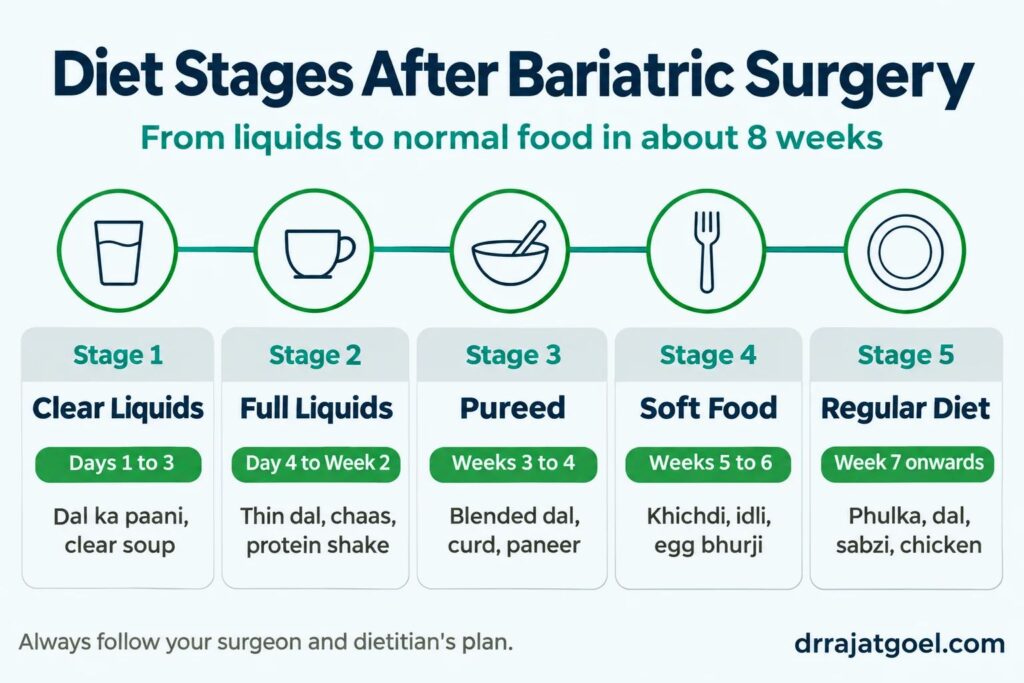
The 5 Diet Stages After Bariatric Surgery at a Glance
| Stage | Timing (Approx.) | Type of Food | Indian Examples |
| Stage 1: Clear liquids | Days 1 to 3 | Thin, see-through liquids | Water, dal ka paani, clear soup, coconut water |
| Stage 2: Full liquids | Day 4 to end of Week 2 | Smooth, pourable liquids | Thin dal, chaas, protein shake, strained soup |
| Stage 3: Pureed food | Weeks 3 to 4 | Smooth paste, no lumps | Blended dal, mashed paneer, curd, pureed khichdi |
| Stage 4: Soft food | Weeks 5 to 6 | Soft, easily mashed with a fork | Soft khichdi, idli, paneer bhurji, egg bhurji, dalia |
| Stage 5: Regular healthy diet | Week 7 onwards | Normal home food in small portions | Phulka, dal, sabzi, curd, grilled chicken or fish |
Golden Rules for Eating After Bariatric Surgery
Before we go stage by stage, these rules apply throughout your recovery and for life:
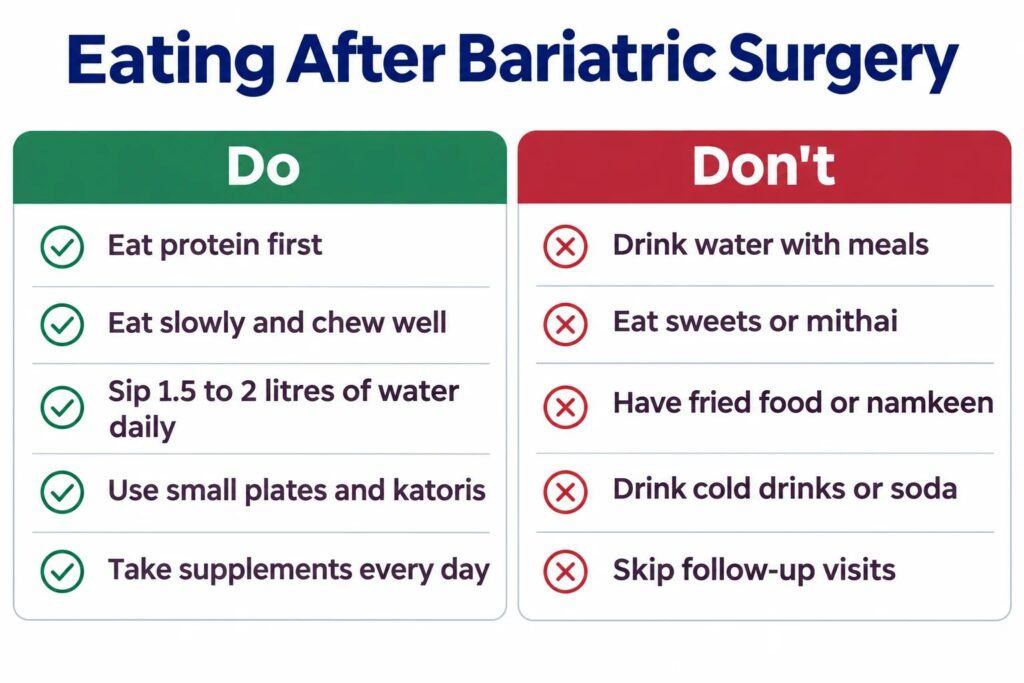
- Protein first. At every meal, eat the protein part first (dal, paneer, curd, egg, chicken, fish) before anything else.
- Eat small. Your stomach now holds only a few tablespoons in the beginning. Stop at the first feeling of fullness.
- Eat slowly. Take 20 to 30 minutes for a meal and chew every bite very well, 20 to 30 times.
- Do not drink with meals. Stop drinking 30 minutes before a meal and wait 30 minutes after. Drinking with food can cause discomfort and push food through too fast.
- Sip water all day. Aim for about 5 to 2 litres of fluids a day, in small sips, to avoid dehydration.
- No sugar, no fried food, no cold drinks. Sweets, mithai, fried snacks and fizzy drinks can cause dumping syndrome, discomfort and weight regain.
- Take your supplements daily. Multivitamin, calcium, vitamin D, vitamin B12 and iron as advised, for life.
- Avoid alcohol, at least for the first 6 to 12 months, and limit it strictly after that.
How Much Protein Do You Need After Bariatric Surgery?
Protein is the most important part of your diet after surgery. It helps your stomach heal, protects your muscles while you lose fat, and prevents hair loss and weakness.
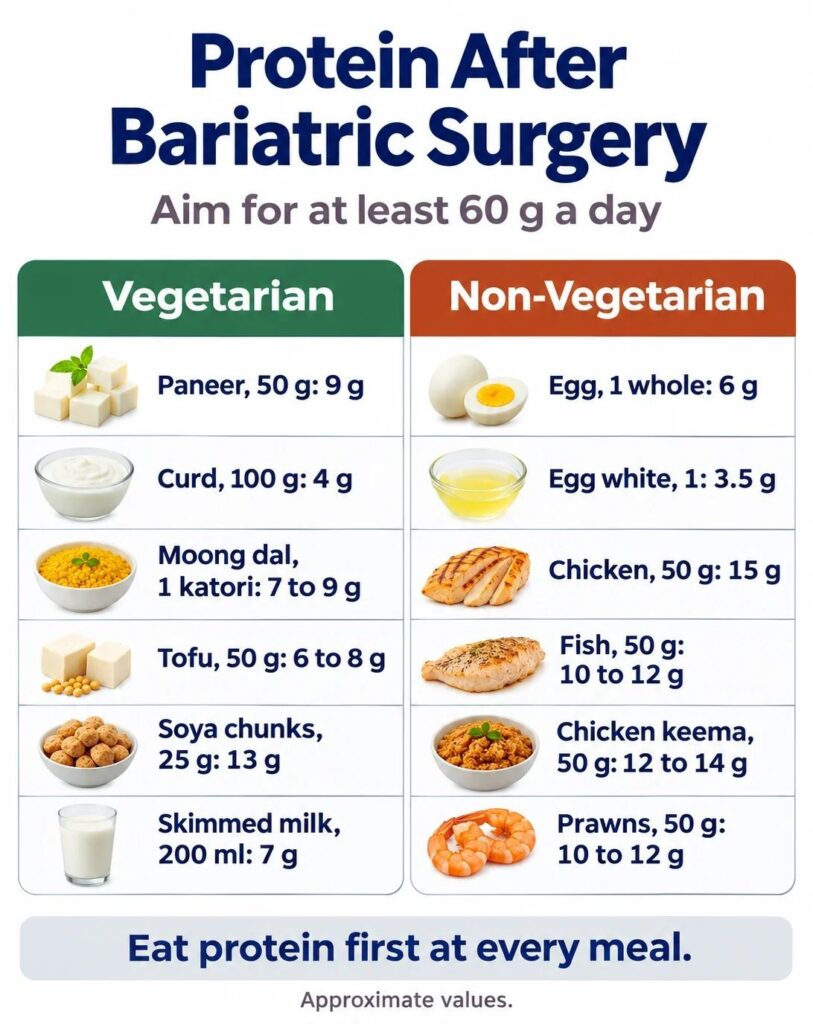
Most patients are advised to take at least 60 grams of protein a day, and sometimes more, as decided by your dietitian. In the early weeks, it is hard to get this much from food alone, so most patients need a protein supplement (whey or plant-based protein powder).
Protein in common Indian foods (approx.)
| Vegetarian Source | Approx. Protein | Non-Vegetarian Source | Approx. Protein |
| Paneer, 50 g | 9 g | Egg, 1 whole | 6 g |
| Low-fat curd, 100 g | 4 g | Egg white, 1 | 3.5 g |
| Cooked moong dal, 1 katori (150 g) | 7 to 9 g | Chicken breast, cooked, 50 g | 15 g |
| Tofu, 50 g | 6 to 8 g | Fish, cooked, 50 g | 10 to 12 g |
| Soya chunks, cooked, 25 g dry | 13 g | Chicken soup, strained, 1 cup | 3 to 5 g |
| Skimmed milk, 200 ml | 7 g | Chicken keema, cooked, 50 g | 12 to 14 g |
| Sattu, 2 tbsp | 5 to 6 g | Prawns, cooked, 50 g | 10 to 12 g |
| Protein powder, 1 scoop | 20 to 25 g | Protein powder, 1 scoop | 20 to 25 g |
Values are approximate and vary by brand and recipe.
Stage 1: Clear Liquid Diet (Days 1 to 3)
Right after surgery, your new stomach needs complete rest. In the hospital and for the first couple of days at home, you will take only clear, thin liquids, in small sips of about 30 ml (2 tablespoons) every 10 to 15 minutes.
What you can have:
- Water
- Dal ka paani (thin water strained from cooked moong dal)
- Clear vegetable soup, strained
- Clear chicken soup or broth, strained, fat removed (non-veg)
- Coconut water (small amounts)
- Jeera water or saunf water
- Sugar-free nimbu paani
- Thin, sugar-free green tea or herbal tea, lukewarm
Avoid: Sugar, fizzy drinks, packaged juices, tea and coffee with milk, very hot or very cold drinks, and drinking with a straw (it can make you swallow air).
Stage 2: Full Liquid Diet (Day 4 to End of Week 2)
Now you can take thicker, smooth liquids that are still pourable. This stage is mainly about getting enough protein and fluids. Take about 60 to 100 ml at a time, slowly, 6 to 8 times a day.
Vegetarian full liquid options
- Thin moong dal, well-cooked and blended
- Chaas (thin buttermilk), unsweetened, lightly salted
- Skimmed milk or soya milk, without sugar
- Protein shake made with water or skimmed milk
- Strained vegetable soup (lauki, tomato, pumpkin)
- Thin sattu drink, unsweetened
- Thin, unsweetened lassi made with low-fat curd
Non-vegetarian full liquid options
- Chicken soup, blended and strained, fat removed
- Fish soup, blended and strained
- Egg drop soup made with egg white
Sample Stage 2 day plan
| Time | Vegetarian | Non-Vegetarian |
| 7 AM | Warm water, jeera water | Warm water, jeera water |
| 8 AM | Protein shake with skimmed milk (100 ml) | Protein shake with skimmed milk (100 ml) |
| 10 AM | Coconut water (100 ml) | Coconut water (100 ml) |
| 11 AM | Thin moong dal (100 ml) | Strained chicken soup (100 ml) |
| 1 PM | Chaas (100 ml) | Chaas (100 ml) |
| 3 PM | Strained lauki or tomato soup (100 ml) | Egg white drop soup (100 ml) |
| 5 PM | Protein shake (100 ml) | Protein shake (100 ml) |
| 7 PM | Thin moong dal (100 ml) | Strained fish or chicken soup (100 ml) |
| 9 PM | Warm skimmed milk or soya milk (100 ml) | Warm skimmed milk (100 ml) |
Sip water between these feeds, but not within 30 minutes of a feed.
Stage 3: Pureed Diet (Weeks 3 to 4)
Now your food should be smooth like a thick paste, with no lumps, similar to baby food. Blend everything well. Portions are small, about 3 to 4 tablespoons (around half a katori) per meal, 5 to 6 meals a day.
Vegetarian pureed options
- Moong dal or masoor dal, thick and blended
- Moong dal khichdi, blended smooth
- Low-fat curd (dahi) or hung curd
- Paneer, grated and blended with a little milk or curd
- Silken tofu, mashed
- Mashed lauki, pumpkin or carrot, cooked soft
- Sugar-free suji or dalia porridge, blended
- Besan or sattu porridge, thin and smooth
Non-vegetarian pureed options
- Soft scrambled egg white, mashed well
- Chicken, cooked soft and blended with soup
- Fish (rohu, basa, pomfret), steamed and mashed
- Chicken keema, cooked very soft and blended
Sample Stage 3 day plan
| Meal | Vegetarian | Non-Vegetarian |
| Breakfast | Blended dalia with protein powder | Mashed soft scrambled egg white |
| Mid-morning | Low-fat curd (3 to 4 tbsp) | Low-fat curd (3 to 4 tbsp) |
| Lunch | Blended moong dal khichdi | Blended chicken with soup |
| Evening | Protein shake | Protein shake |
| Dinner | Blended paneer with mashed lauki | Steamed fish, mashed |
| Night | Warm skimmed milk | Warm skimmed milk |
Stage 4: Soft Diet (Weeks 5 to 6)
You can now eat soft foods that mash easily with a fork. This is the stage where food starts to feel “normal” again. Portions are about half a katori to three-fourth katori per meal. Chew very well.
Vegetarian soft food options
- Soft moong dal khichdi (not blended)
- Idli, soft and well chewed
- Soft poha or upma, without too much oil
- Vegetable dalia
- Paneer bhurji, soft
- Tofu bhurji
- Steamed dhokla
- Soft-cooked vegetables like lauki, tori, tinda, pumpkin
- Curd, raita (without onion initially)
Non-vegetarian soft food options
- Egg bhurji or soft boiled egg
- Chicken keema, soft and well cooked
- Fish curry with soft fish (light on spice and oil)
- Shredded boiled chicken with a little curd
Sample Stage 4 day plan
| Meal | Vegetarian | Non-Vegetarian |
| Breakfast | 1 to 2 soft idlis with thin sambar | Egg bhurji (1 to 2 eggs) |
| Mid-morning | Low-fat curd | Low-fat curd |
| Lunch | Soft moong dal khichdi with lauki | Soft chicken keema with a little khichdi |
| Evening | Protein shake or steamed dhokla | Protein shake |
| Dinner | Paneer bhurji with soft-cooked tori | Soft fish curry with mashed vegetables |
| Night | Warm skimmed milk | Warm skimmed milk |
Stage 5: Regular Healthy Diet (Week 7 Onwards)
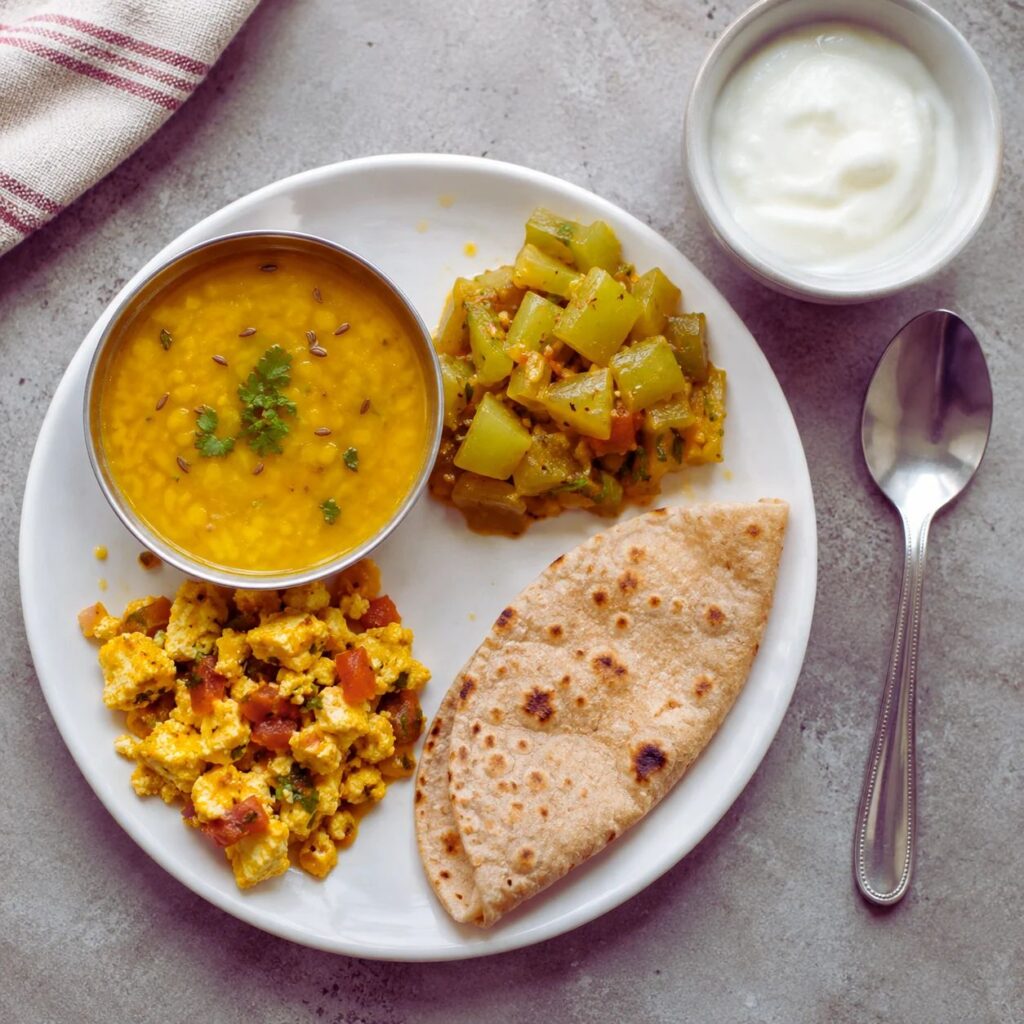
From about the seventh week, you can slowly return to normal home-cooked Indian food, but in much smaller portions than before. A typical meal is about 1 small katori to 1 cup of food. Introduce one new food at a time, and if something causes discomfort, try it again after a week.
What a healthy plate looks like now
- Half the plate: protein, like dal, paneer, curd, egg, chicken or fish
- One-quarter: vegetables, like sabzi or salad (salad usually after 2 to 3 months)
- One-quarter: carbs, like half a phulka, a few spoons of rice or a small portion of millet
Sample Stage 5 day plan
| Meal | Vegetarian | Non-Vegetarian |
| Breakfast | Moong dal cheela with curd | Boiled egg (2) or egg white omelette with vegetables |
| Mid-morning | Roasted chana (small handful) or fruit | Buttermilk or fruit |
| Lunch | Half phulka, dal, sabzi, curd | Half phulka, grilled chicken, sabzi |
| Evening | Sprouts chaat or protein shake | Chicken tikka (2 to 3 pieces) or protein shake |
| Dinner | Paneer or tofu sabzi with a little brown rice | Fish curry with sabzi |
| Night | Warm skimmed milk (optional) | Warm skimmed milk (optional) |
Foods to Avoid After Bariatric Surgery
For the first few months (and limit for life):
- Sugar, mithai, jalebi, halwa, ice cream, chocolates and sweetened drinks
- Fried foods like samosa, pakora, puri, bhature and namkeen
- Fizzy drinks and sodas (they stretch the stomach and cause discomfort)
- Alcohol
- Very spicy, oily gravies
Foods that can be hard to digest early on (introduce slowly after 2 to 3 months):
- Thick rotis, naan and paratha (start with thin phulka)
- Sticky rice and bread, which can form a lump in the small stomach
- Raw salads, tough fibrous vegetables and corn
- Dry fruits and nuts (chew very well)
- Tough or dry meat pieces
Common Problems and How to Handle Them
| Problem | What Usually Helps |
| Nausea or vomiting | Eat slower, take smaller bites, chew more, stop at first fullness |
| Constipation | Sip more water, add soft fibre as advised, ask your doctor about a mild laxative |
| Dehydration | Keep a bottle with you and sip every 10 to 15 minutes |
| Dumping syndrome (sweating, dizziness, loose motions after sweets) | Avoid sugar and very sweet foods, eat protein first |
| Hair fall (around 3 to 6 months) | Meet your protein target and take supplements regularly |
| Food getting stuck | Chew more, avoid bread and sticky rice early on |
If vomiting is persistent, you cannot keep liquids down, or you have severe pain, contact your surgeon immediately.
Vitamins and Supplements After Bariatric Surgery
Because you eat much less, and some surgeries reduce absorption, lifelong supplements are essential. Your doctor will advise the exact doses, but most patients need:
- A daily multivitamin with minerals
- Calcium (often calcium citrate) and vitamin D
- Vitamin B12, especially important for vegetarians
- Iron, especially for women
- Protein supplement, particularly in the first few months
Regular blood tests help catch and correct deficiencies early. You can read the detailed nutritional guidelines for bariatric surgery patients from the American Society for Metabolic and Bariatric Surgery.
Does Diet Differ After Sleeve and Bypass?
The stages are mostly the same for both. After gastric bypass or mini bypass, patients need to be extra careful about sugar (higher risk of dumping syndrome) and about iron, vitamin B12 and calcium, because absorption is reduced. Read more in our comparison of sleeve gastrectomy vs gastric bypass.
Long-Term Tips for Lasting Weight Loss
- Keep protein first at every meal, for life
- Use small plates and katoris to control portions
- Avoid grazing (eating small amounts all day)
- Walk daily and add strength exercises after your surgeon allows it
- Attend all follow-up visits and dietitian sessions
- Join a support group if available
Read more tips for healthy weight loss.
Frequently Asked Questions
When can I eat normal food after bariatric surgery?
Most patients return to normal, healthy home food in small portions from about 6 to 8 weeks after surgery, after going through the clear liquid, full liquid, pureed and soft food stages.
Can I eat roti after bariatric surgery?
Yes, but usually only from the regular diet stage, around 7 to 8 weeks after surgery. Start with half a thin phulka, chew it very well, and avoid thick rotis, naan and paratha in the early months.
Can I eat rice after bariatric surgery?
Soft khichdi can be eaten from the soft diet stage. Plain rice, which can feel heavy or get stuck, is best added in small amounts after 2 to 3 months.
How much protein should I take after bariatric surgery?
Most patients are advised to take at least 60 grams of protein a day, or as decided by their dietitian. A protein supplement is usually needed in the first few months.
What are the best vegetarian protein sources after bariatric surgery?
Paneer, curd, moong dal, tofu, soya, sattu, skimmed milk and protein powder are excellent vegetarian protein sources after bariatric surgery.
Can I drink tea or coffee after bariatric surgery?
Usually, yes, after the first few weeks, without sugar and in small amounts. Caffeine can cause acidity and dehydration, so follow your surgeon’s advice on when to restart.
Why should I not drink water with meals after bariatric surgery?
Drinking with meals fills your small stomach quickly, can cause discomfort or vomiting, and pushes food through faster, making you hungry sooner. Stop drinking 30 minutes before and after meals.
Final Word
The right diet after bariatric surgery is just as important as the surgery itself. Moving slowly through the stages, putting protein first, eating small and slow, sipping water all day and taking your supplements will help you heal well, lose weight safely and keep it off for life. With a little planning, everyday Indian food, both vegetarian and non-vegetarian, fits perfectly into life after surgery.
At Dr Rajat Goel’s clinic, every bariatric patient gets a personalised diet plan and 6 months of dietitian support after surgery. If you are planning weight loss surgery or need guidance after it, you can book a consultation with Dr Rajat Goel. Learn more about bariatric surgery in Delhi and the bariatric surgery cost in India.
Disclaimer: This article is for general awareness only and is not a substitute for medical or dietary advice. Always follow the specific plan given by your surgeon and dietitian. Protein values are approximate.
Medically Reviewed by Dr Rajat Goel
Dr Rajat Goel is a Bariatric, Metabolic and Laparoscopic Surgeon based in New Delhi with 23+ years of experience and 2,000+ bariatric surgeries. Read his full profile.
Follow Dr Rajat Goel: Instagram | Facebook | X (Twitter) | LinkedIn

