
“Doctor, what side effects will I get after the operation?” Patients ask this question with a lot of worry, and it is a very fair question. Bariatric surgery changes the way your stomach and digestion work, so your body takes some time to adjust.
The good news is that most side effects after bariatric surgery are mild, temporary and easy to manage when you know what to expect and follow your surgeon’s and dietitian’s advice. Serious complications are uncommon at experienced centres.
In this article, we explain the common and less common side effects of bariatric surgery, when they usually happen, how to manage them at home, and the warning signs that need urgent medical attention.
Quick Answer
- Most common side effects: nausea, vomiting, tiredness, constipation, dehydration and food intolerance in the first few weeks.
- Within 3 to 6 months: temporary hair fall, dumping syndrome (mainly after bypass) and sometimes gallstones.
- Long term: vitamin and mineral deficiencies, loose skin, acid reflux (mainly after sleeve) and weight regain if habits slip.
- Serious complications like leak, bleeding or blood clots are uncommon and usually happen in the first few days or weeks.
- Most side effects can be prevented or managed with slow eating, enough protein and water, daily supplements and regular follow-ups.
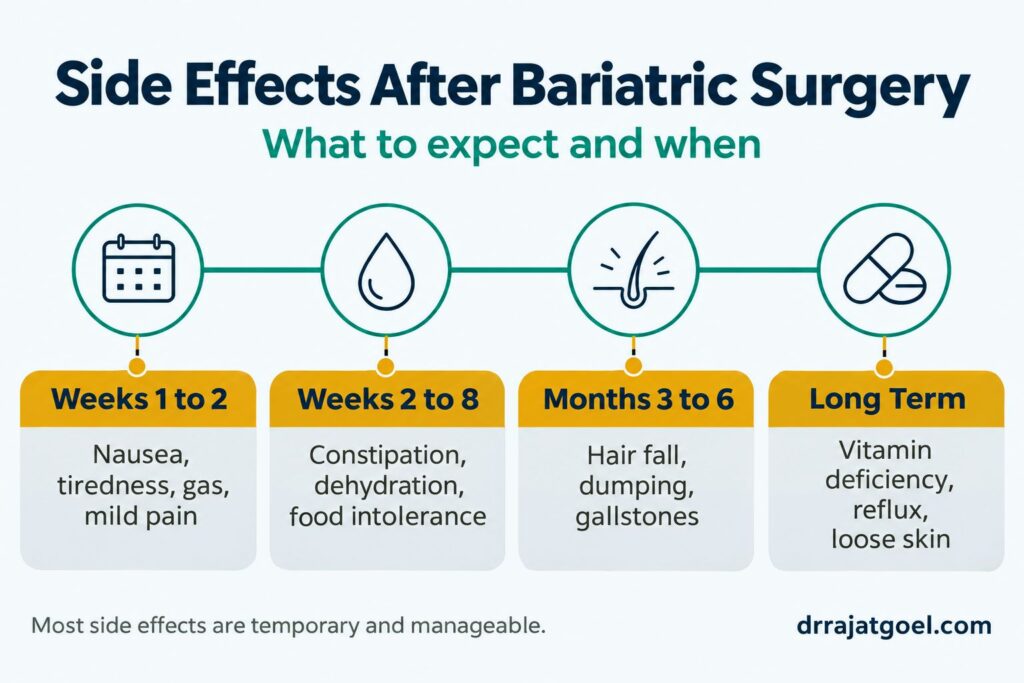
Side Effects Timeline: What to Expect and When
| Time After Surgery | Common Side Effects |
| First 1 to 2 weeks | Pain at the cut sites, nausea, vomiting, tiredness, gas, shoulder pain, low appetite |
| Weeks 2 to 8 | Constipation, dehydration, food intolerance, low energy, mood swings |
| Months 3 to 6 | Hair fall, dumping syndrome, gallstones, changes in bowel habits |
| After 6 months and long term | Vitamin and mineral deficiencies, loose skin, acid reflux, weight plateau or regain |
Common Side Effects in the First Few Weeks
1. Nausea and vomiting
This is the most common problem in the early weeks. It usually happens when you eat too fast, take a big bite, do not chew enough, or eat beyond the first feeling of fullness.
How to manage:
- Eat very slowly, taking 20 to 30 minutes for a small meal
- Take small bites and chew each one 20 to 30 times
- Stop eating at the first sign of fullness
- Do not drink water with meals; wait 30 minutes before and after
- Move to the next diet stage only when advised
See a doctor if you cannot keep even liquids down for more than a day, as this can lead to dehydration and vitamin B1 (thiamine) deficiency.
2. Dehydration
With a small stomach, it is easy to drink too little water. Signs include dark yellow urine, dry mouth, headache, dizziness and tiredness.

How to manage:
- Sip water all day, aiming for about 5 to 2 litres daily
- Keep a water bottle with you and take small sips every 10 to 15 minutes
- Coconut water, dal ka paani and clear soups also help
3. Constipation
Very common in the first few months because you eat less food and less fibre, and may be taking iron or calcium supplements.
How to manage:
- Drink enough water through the day
- Walk daily
- Add soft fibre like cooked vegetables and fruits when your diet stage allows
- Ask your doctor about a mild stool softener or fibre supplement if needed
4. Tiredness and low energy
You are eating far fewer calories than before, so feeling tired in the first few weeks is normal. It usually improves as your diet progresses.
How to manage:
- Meet your daily protein target (usually at least 60 grams)
- Take your supplements regularly
- Walk a little more each day; gentle activity actually improves energy
- Rest well and sleep on time
5. Gas, bloating and shoulder pain
After laparoscopic surgery, some of the gas used during the operation can cause shoulder or upper back pain for a few days. Bloating is also common early on.
How to manage:
- Walk around frequently after surgery
- Avoid fizzy drinks and drinking through a straw
- Avoid gas-forming foods like rajma, chhole and cabbage in the early weeks
6. Food intolerance
Some foods may feel uncomfortable or seem to get stuck, especially dry meat, bread, sticky rice and raw salads.
How to manage:
- Introduce one new food at a time
- If a food causes discomfort, wait a week and try again in a softer form
- Chew very well
Following a proper stage-wise plan prevents most of these early problems. See our Indian diet plan after bariatric surgery.
Side Effects in the First 3 to 6 Months
7. Hair fall
Many patients notice hair fall around 3 to 6 months after surgery. This happens because of the stress of surgery and rapid weight loss, and sometimes low protein, iron or zinc. The good news is that it is temporary, and hair usually grows back.

How to manage:
- Meet your daily protein target
- Take your multivitamin, iron and other supplements as advised
- Get your blood tests done on time to correct any deficiency
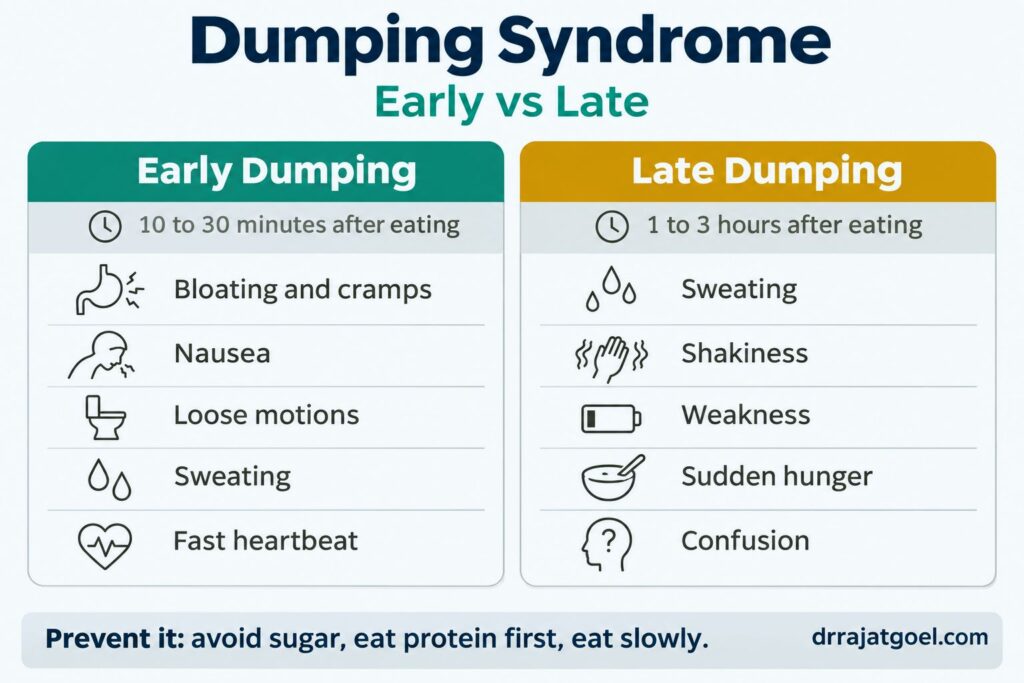
8. Dumping syndrome
Dumping syndrome happens when food, especially sugary or very rich food, moves too quickly from the stomach into the small intestine. It is more common after gastric bypass and mini bypass, but can also happen after sleeve.
| Type | When It Happens | Symptoms |
| Early dumping | 10 to 30 minutes after eating | Bloating, cramps, nausea, loose motions, sweating, fast heartbeat, dizziness |
| Late dumping | 1 to 3 hours after eating | Sweating, shakiness, weakness, hunger, confusion (due to low blood sugar) |
How to manage:
- Avoid sugar, sweets, mithai, sweetened drinks and juices
- Eat protein first at every meal
- Eat small, frequent meals slowly
- Do not drink with meals
- If late dumping happens, take a small snack with protein and complex carbs, and tell your doctor
9. Gallstones
Rapid weight loss increases the chance of gallstones forming in the first year after bariatric surgery. Some patients develop pain in the upper right abdomen after fatty meals.
How to manage:
- Many surgeons prescribe a medicine called ursodeoxycholic acid (UDCA) for the first few months after surgery to lower the risk of gallstones
- Report any pain in the upper right abdomen, fever or yellow eyes promptly
Read more about which size of gallbladder stone is dangerous.
10. Mood changes
Some patients feel low, anxious or emotional after surgery, as their body, eating habits and lifestyle change quickly. Food may also have been a source of comfort earlier.
How to manage:
- Talk openly with your family, surgeon or a counsellor
- Join a bariatric support group if possible
- Reach out for professional help if low mood lasts more than two weeks
Long-Term Side Effects
11. Vitamin and mineral deficiencies
Because you eat much less, and some surgeries reduce absorption, deficiencies of iron, vitamin B12, vitamin D, calcium, folate and thiamine (vitamin B1) can develop if supplements are not taken. These are more common after bypass than after sleeve, and vegetarians are at extra risk of B12 deficiency.

Symptoms can include tiredness, breathlessness, tingling or numbness in hands and feet, bone pain and hair fall.
How to manage:
- Take your multivitamin, calcium with vitamin D, B12 and iron daily, for life
- Get blood tests done at regular intervals, usually every 3 to 6 months in the first year and then yearly
12. Acid reflux (heartburn)
Acid reflux can start or get worse after sleeve gastrectomy in some patients. Gastric bypass, on the other hand, usually improves reflux.
How to manage:
- Avoid lying down within 2 to 3 hours of eating
- Avoid spicy, oily food, tea, coffee and late-night meals
- Take acid-reducing medicines if prescribed
- In persistent cases, your surgeon may advise an endoscopy or, rarely, conversion to bypass
Learn more in our comparison of sleeve gastrectomy vs gastric bypass.
13. Loose skin
After losing a large amount of weight, many people notice loose skin on the stomach, arms, thighs and chest. This is not harmful, but it can be bothersome.
How to manage:
- Lose weight steadily rather than very fast
- Do strength exercises to build muscle
- Keep your skin hydrated
- Once your weight has been stable for 12 to 18 months, you can discuss body contouring surgery if needed
14. Weight plateau or regain
Weight loss often slows down after the first year, which is normal. Some patients regain weight after 2 to 5 years, usually because old eating habits slowly return.
How to manage:
- Keep protein first, portions small and sugar low
- Avoid grazing (eating small amounts all day) and liquid calories
- Stay active with daily walks and strength training
- Keep attending follow-up and dietitian visits
15. Alcohol sensitivity
After bariatric surgery, alcohol is absorbed much faster, so even a small amount can raise blood alcohol levels quickly. There is also a higher risk of alcohol dependence after surgery.
How to manage: Avoid alcohol for at least the first 6 to 12 months, and keep it strictly limited after that.
Serious but Uncommon Complications
These are rare at experienced centres, but it is important to know about them so you can act quickly:
| Complication | When It Usually Happens | Warning Signs |
| Staple line leak | First 1 to 2 weeks | Fever, fast heartbeat, worsening abdominal pain, breathlessness |
| Bleeding | First few days | Black stools, vomiting blood, dizziness, weakness |
| Blood clots (DVT or PE) | First few weeks | Leg swelling or pain, chest pain, sudden breathlessness |
| Narrowing (stricture) | Weeks to months | Food or liquids getting stuck, repeated vomiting |
| Ulcer at the join | Mainly after bypass, especially in smokers or with painkillers | Burning pain, vomiting, black stools |
| Internal hernia or bowel blockage | After bypass, sometimes years later | Severe cramping pain, vomiting, bloating |
How the risk is reduced:
- Choosing an experienced bariatric surgeon and a well-equipped hospital
- Walking early after surgery and using blood thinners and compression stockings as advised
- Stopping smoking well before surgery and not restarting
- Avoiding painkillers like ibuprofen and diclofenac, especially after bypass, unless your surgeon approves
- Attending all follow-up visits
The overall risk of a life-threatening complication after modern laparoscopic bariatric surgery is low, and is similar to many common operations such as gallbladder removal. You can read more about the safety and benefits of bariatric surgery on the US National Institutes of Health (NIDDK) website.
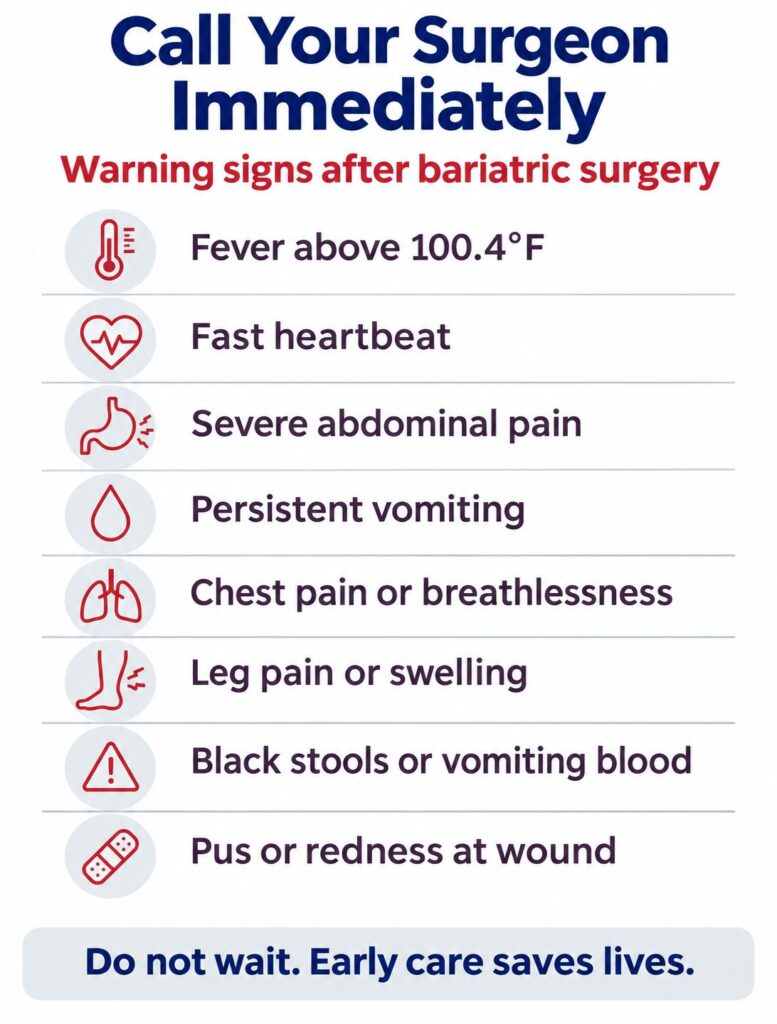
Warning Signs: Call Your Surgeon Immediately
Contact your surgeon or go to the nearest hospital without delay if you have:
- Fever above 100.4°F (38°C)
- Fast heartbeat, especially more than 110 to 120 beats per minute
- Severe or worsening abdominal pain
- Persistent vomiting, or you cannot keep liquids down
- Chest pain or sudden breathlessness
- Pain or swelling in one leg
- Black stools or vomiting blood
- Very little urine for more than 8 hours
- Redness, pus or bad smell from a wound
Simple Habits That Prevent Most Side Effects

- Follow the diet stages strictly; do not rush to solid food
- Eat protein first and meet your daily protein target
- Eat slowly and chew well
- Sip 5 to 2 litres of water a day, but not with meals
- Take your supplements daily, for life
- Avoid sugar, fried food, fizzy drinks and alcohol
- Walk daily and add strength exercises when allowed
- Do not smoke, and avoid painkillers unless approved
- Attend every follow-up visit and blood test
Are the Side Effects Worth It?
For most patients with severe obesity, yes. Bariatric surgery helps people lose a large amount of weight and keep it off, and often improves or resolves type 2 diabetes, high blood pressure, sleep apnoea, joint pain, fatty liver and PCOS. Most side effects are short-lived and manageable, while the health benefits last for years.
The key is choosing an experienced team, understanding what to expect, and following your aftercare plan. To understand costs and options, read our guide on bariatric surgery cost in India.
Frequently Asked Questions
What are the most common side effects of bariatric surgery?
The most common side effects are nausea, vomiting, tiredness, constipation, dehydration and food intolerance in the first few weeks, and temporary hair fall around 3 to 6 months after surgery.
Is hair fall after bariatric surgery permanent?
No. Hair fall after bariatric surgery is usually temporary and starts around 3 to 6 months after surgery. Hair generally grows back with good protein intake and regular supplements.
What is dumping syndrome after bariatric surgery?
Dumping syndrome happens when food, especially sugary food, moves too quickly into the small intestine. It can cause cramps, loose motions, sweating, dizziness and a fast heartbeat. It is more common after gastric bypass and is prevented by avoiding sugar and eating protein first.
How long do side effects last after bariatric surgery?
Most early side effects like nausea, tiredness and food intolerance settle within 4 to 8 weeks. Hair fall usually settles by 9 to 12 months. Vitamin and mineral needs continue for life, so supplements must be taken long term.
Is bariatric surgery safe?
Modern laparoscopic bariatric surgery is generally safe, with a low risk of serious complications at experienced centres, similar to many common operations. The risk is lowest when the surgery is done by an experienced bariatric team and patients follow the aftercare plan.
Can bariatric surgery cause gallstones?
Yes. Rapid weight loss after bariatric surgery increases the risk of gallstones. Many surgeons prescribe ursodeoxycholic acid for a few months after surgery to reduce this risk.
Which side effects need urgent medical attention?
Fever, fast heartbeat, severe abdominal pain, persistent vomiting, chest pain, breathlessness, leg swelling, black stools or vomiting blood need urgent medical attention.
Final Word
Like any major surgery, bariatric surgery has side effects, but most are mild, temporary and easy to manage with the right guidance. Knowing what to expect, eating the right way, taking your supplements and staying in touch with your surgical team makes a huge difference to your recovery and long-term results.
If you are considering weight loss surgery, or have questions about your recovery, you can book a consultation with Dr Rajat Goel. Learn more about bariatric surgery in Delhi.
Disclaimer: This article is for general awareness only and is not a substitute for medical advice. If you have any symptoms after surgery, contact your surgeon.
Medically Reviewed by Dr Rajat Goel
Dr Rajat Goel is a Bariatric, Metabolic and Laparoscopic Surgeon based in New Delhi with 23+ years of experience and 2,000+ bariatric surgeries. Read his full profile.

